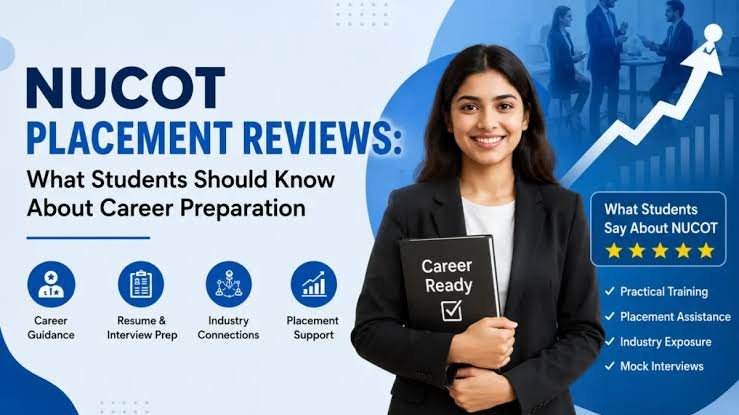
For students and working professionals investing in technical training, career support can be an important part of the decision. Learners may want help improving their resumes, explaining their projects, preparing for interviews and understanding how to approach relevant job opportunities.
People researching NUCOT placement reviews should examine what career assistance involves and how it fits into the wider learning experience. It is important to understand the services available, the responsibilities of the learner and the factors that influence recruitment outcomes.
What Does Placement Assistance Mean?
Placement assistance generally refers to support that helps learners prepare for recruitment opportunities. Depending on the program, it may include resume guidance, mock interviews, portfolio feedback, career preparation and information about relevant openings.
These activities can help candidates present their skills more effectively. However, placement assistance is not the same as a direct job offer or a guarantee of employment.
Employers make hiring decisions based on their requirements, the candidate’s skills, interview performance and the availability of suitable positions.
1. Resume Preparation
A resume provides an overview of a candidate’s education, skills, projects and experience. For freshers, it may be especially important to explain academic or personal projects clearly because professional experience is limited.
A useful resume should be accurate, readable and relevant to the role. Candidates can improve it by describing their contribution to a project, the tools used and the outcome achieved.
For example, a data analyst candidate might describe how they cleaned a dataset, used SQL to retrieve information and created a dashboard to present findings. The description should reflect work they genuinely completed and can explain during an interview.
2. Building a Portfolio
A portfolio allows candidates to demonstrate their practical abilities. It may contain programming projects, data analysis reports, dashboards or other work relevant to the target role.
A strong project includes more than screenshots or finished code. Candidates should explain the problem, data source, methods, assumptions and limitations.
For data science roles, a portfolio might include exploratory data analysis, a predictive model or a business dashboard. The projects should show clear reasoning and appropriate use of tools rather than simply listing technologies.
A portfolio can support a recruitment discussion, but it does not guarantee that an employer will select the candidate.
3. Preparing for Technical Interviews
Technical interviews help employers evaluate a candidate’s understanding and problem-solving approach. The format varies by role and organisation.
Candidates pursuing data-related positions may need to explain SQL queries, discuss data-cleaning decisions, interpret charts or demonstrate Python fundamentals. Other technical roles may require coding exercises, testing concepts or system knowledge.
Preparation should focus on understanding the underlying concepts. Memorising answers may help with familiar questions but is less useful when interviewers introduce a new problem or ask the candidate to explain their reasoning.
4. The Value of Mock Interviews
Mock interviews provide an opportunity to practise answering questions in a simulated interview setting. They can help candidates identify knowledge gaps, improve their explanations and become more comfortable discussing projects.
Feedback is most useful when it identifies specific areas for improvement. A candidate might need to explain technical decisions more clearly, strengthen a programming concept or provide a more structured example of problem-solving.
Mock interviews should be followed by focused practice. Repeating an interview without addressing identified weaknesses may not lead to meaningful improvement.
5. How to Evaluate NUCOT Placement Reviews
When researching NUCOT placement reviews, prospective learners should look for information that helps them understand the career-support process.
Useful questions include:
- What resume and interview preparation services are included?
- Are mock interviews available, and how is feedback provided?
- Is there support for building or presenting projects?
- How long is career assistance available?
- Are there eligibility or performance requirements?
- What are the conditions and limitations of the support?
The answers should be confirmed using current course information and written terms. Online reviews may help identify questions, but an individual account should not be treated as proof of what every learner will experience.
6. Understanding Hiring Outcomes
Career outcomes are influenced by several factors, including technical skills, communication, role suitability, interview performance, location, experience and employer demand.
Even a well-prepared candidate may not be selected for every vacancy. Conversely, improving a portfolio or strengthening interview performance may create better opportunities over time.
Learners should set realistic expectations and take responsibility for regular practice, applications and continued skill development. Career assistance can support these efforts, but it cannot control employer decisions.
7. Compare the Complete Training Experience
Placement assistance should be considered alongside the quality and structure of the training itself. Candidates need to develop skills that match the roles they intend to pursue.
Before enrolling in a data science program, review the curriculum, project work, trainer support, course schedule and fees. Confirm the refund policy and all applicable conditions.
For NUCOT, prospective learners should consult the current program information directly and clarify the exact scope of the career support included before making a decision.
Conclusion
NUCOT placement reviews can help prospective learners identify questions about interview preparation and career assistance. A useful evaluation should examine resume guidance, mock interviews, portfolio development, eligibility conditions and the transparency of course policies.
Placement assistance can help candidates prepare for recruitment, but it does not guarantee a job. Learners should combine available support with technical practice, meaningful projects and realistic expectations about employer requirements.
Suggested internal link: Explore NUCOT’s placement information