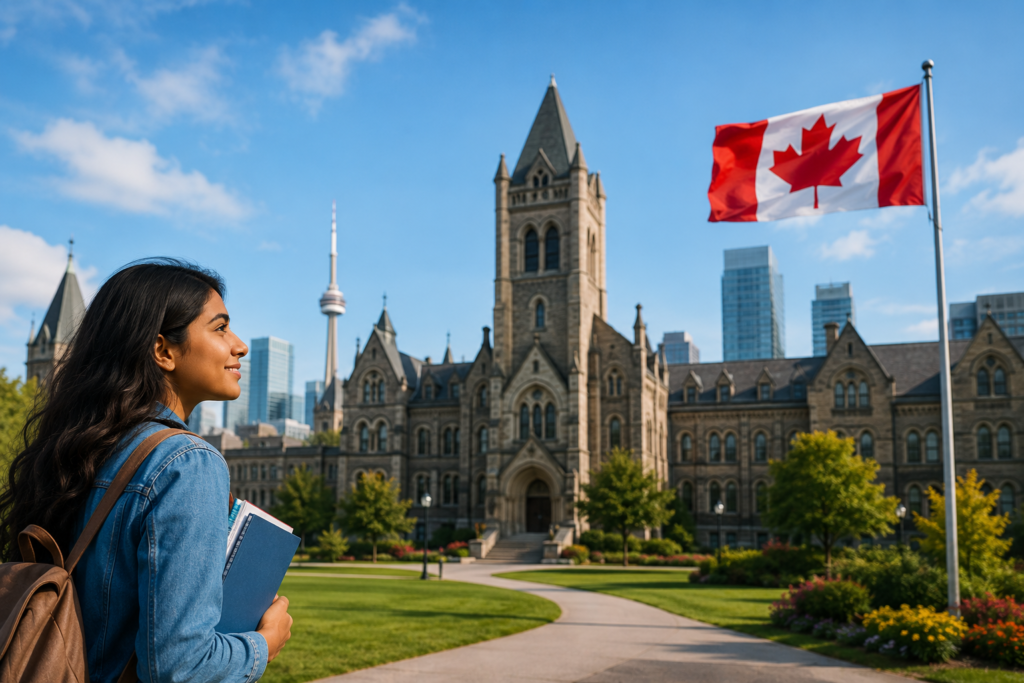
Canada has become almost the default answer whenever someone asks about studying abroad these days — and for good reason, mostly. But it’s also gotten more complicated recently, with tightening immigration policies making it less of a guaranteed path to permanent residency than it was five years ago.
If you’re seriously considering study in Canada for Indian students as an option in 2026, here’s what you actually need to know — the real picture, not just the glossy brochure version.
Why Canada Remains Popular Despite Policy Changes
Quick answer: Study in Canada for Indian students remains attractive due to globally recognized universities, relatively affordable tuition compared to the US, a large existing Indian student community, and post-graduation work permit options — though recent policy tightening has made the pathway to permanent residency less straightforward than before.
Canada isn’t the easy route it was marketed as a few years ago, but it’s still solid if approached with realistic expectations.
Tuition and Living Costs
Tuition fees for international undergraduate programs typically range from CAD 15,000-35,000 annually, depending on the university and program. Living costs add another CAD 10,000-15,000 yearly, varying significantly by city.
- Toronto and Vancouver are notably more expensive than smaller cities
- Ontario and British Columbia host most popular universities
- On-campus housing is often cheaper but limited in availability
The Visa Process (What Actually Matters)
Canada’s study permit process requires proof of acceptance from a Designated Learning Institution, sufficient funds, and increasingly stringent documentation. Processing times have fluctuated, sometimes stretching several months, so applying early is genuinely important.
Post-Graduation Work Permit (PGWP)
Quick answer: The Post-Graduation Work Permit allows international graduates to work in Canada for up to three years depending on program length, though recent policy changes have introduced field-of-study restrictions that didn’t exist previously.
This is the single biggest draw for many Indian students, but recent changes mean it’s worth checking current eligibility criteria carefully before committing to a specific program.
Recent Policy Changes to Know About
Canada has tightened international student caps and increased financial proof requirements in recent years, partly in response to housing pressure concerns. This doesn’t mean opportunities have disappeared — it means the process is more selective than it was during the peak years around 2022-2023.
Popular Fields Among Indian Students
- Computer Science and IT
- Business Management and MBA programs
- Engineering (mechanical, civil, electrical)
- Healthcare and nursing programs
- Hospitality and tourism management
Fields with clearer post-study job market demand tend to offer smoother work permit and eventual PR pathways.
[link to related guide about scholarship essay tips here]
Honest Downsides Worth Knowing
I won’t sugarcoat this — the cost of living, particularly housing, has risen sharply in major Canadian cities. Winters are genuinely tough for many Indian students unaccustomed to the cold, and finding part-time work alongside studies has become more competitive recently.
FAQ
Q: Is it still easy to get PR in Canada after studying there? It’s become more competitive than a few years ago, though still achievable with the right program choice and strong academic and work performance.
Q: How much bank balance do I need to show for a Canadian study visa? Requirements have increased recently — check the current Government of Canada guidelines, as figures update periodically.
Q: Which Canadian cities are more affordable for Indian students? Cities like Winnipeg, Halifax, and smaller Ontario towns tend to offer notably lower living costs than Toronto or Vancouver.
Q: Can I work part-time while studying in Canada? Yes, generally up to 20 hours weekly during term time, though specific rules can change, so verify current regulations before travel.
Q: Are Canadian degrees well-recognized globally? Yes, Canadian universities generally hold strong international recognition, particularly in engineering, business, and healthcare fields.
Conclusion
Study in Canada for Indian students still holds genuine value in 2026, but it requires more careful planning than it once did. Research specific programs with strong job market alignment, budget realistically for rising living costs, and stay updated on immigration policy shifts before making your final decision. Go in informed, not just hopeful.
Suggested image alt text: “Indian student holding Canada study visa documents and university acceptance letter”